A Look at 2025 Shared Micromobility Trends Report in NACTO Member Agencies
Last month, the National Association of City Transportation Officials (NACTO) released their Shared Micromobility in NACTO Member Agencies: 2025 Trends report. This report is a nice compliment to NABSA’s Annual Shared Micromobility State of the Industry Report for North America. While the two reports utilize different data sets, they work together to show the benefits and impact of shared micromobility in cities. The NACTO report takes a look at shared micromobility trips and vehicle trends in NACTO member cities, shares important considerations for shared micromobility planning, and underscores shared micromobility as an integral form of public transportation.
Public Funding For Shared Micromobility
Most importantly to NABSA, the report indicates that public funding is critical for the growth and sustainability of shared micromobility systems. NABSA couldn’t agree more. For 15 years, shared micromobility in North America has helped cities reduce congestion, increase access to transit, improve community health, reduce carbon emissions, and support goals for vulnerable roadway user safety. Public investment supports these benefits to communities and can help extend their impact. The NACTO report suggests that investments focus on staffing, operations and maintenance, community programs, and fare subsidies.
Staffing and Support
A successful and sustainable shared micromobility program takes staffing and dedicated resources. An additional key takeaway that the NACTO report highlights is that despite ridership in the millions, teams managing shared micromobility within public agencies are small and in several cases have competing responsibilities. It recommends that cities invest in staffing capacity to grow teams and resources. NABSA agrees that these efforts would help support demand and continued growth.
Shared Micromobility Growth and Demand
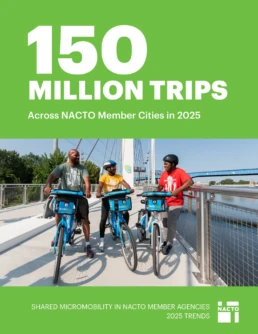
Shared micromobility is a service that gets people where they need to go and is valued by communities of all sizes across North America. It is an essential transportation service that provides freedom and choice, bolsters the economy, and harnesses innovation. Since inception, we have seen bikeshare and shared scooter adoption and popularity continue to grow. The NACTO report states that in 2025 riders took 150 million trips on shared micromobility in NACTO member cities. This includes 92 million bikeshare and 58 million shared e-scooter trips in these cities. The rising number of trips documented in both NABSA’s Annual Shared Micromobility State of the Industry Report for North America and NACTO’s report is a marker for the importance and value of shared micromobility – proving that people are choosing to travel by bikeshare and shared scooters, now more than ever. Stay tuned for NABSA’s 2025 numbers that will be out later this summer.
The Value of Data
Ridership data is key when advancing support for shared micromobility. It informs decision making, supports transportation and infrastructure planning, and contributes to operational efficiency by providing insight on rider behavior and the demand. The ridership graphs included in the NACTO report offer NACTO member city-by-city trip breakdown which directly complements the overall ridership metrics and country-by-country breakdown included in NABSA’s annual report.
Read the full report webpage by going to NACTO’s website. Check out NABSA’s Annual Shared Micromobility State of the Industry Report and stay tuned for our 7th annual report to be released this summer.